Let me share something with you: I'm completely smitten. Not with a person, but with culinary discoveries. Call me passionate (I am). Call me over-the-top (guilty). This isn't about romantic relationships—can you guess what captures my heart?
If you're someone who experiments in the kitchen, explores food blogs, or studies culinary techniques, you've developed an essential skill: research. I'm not talking about casually Googling keywords and clicking through endless pages of results hoping to stumble upon something bookmark-worthy. While I'm typically strict about measurements in cooking and keeping my workspace organized, I absolutely lack self-control when discovering new recipes in my food explorations. I become captivated by a new dessert, a stunning presentation, an innovative technique, or even a single ingredient. This absence of restraint drives me to master the original creation, then develop my own interpretation to share with you here (assuming it turns out successfully).
Throughout the years, I've developed countless recipe fascinations, but what endures in my culinary journey is my admiration for talented bakers, innovative chefs, and inspiring food content creators. With a cookbook library spanning from foundational techniques to specialized pastry arts, plus a recipe feed that's perpetually longer than my grocery list, I'm undeniably a recipe enthusiast. What's fascinating about following creative cooks is observing their evolving techniques—unlike static recipes that remain unchanged. You'll watch them venture into uncharted territory, experimenting with novel ingredients or reimagining familiar ones in unexpected ways. Their ratios of salt, sugar, and aromatics shift over time, reflecting their developing palate and willingness to embrace change. For instance, the concept of incorporating coarse sea salt into chocolate or caramel is a relatively recent innovation.
Can you imagine enjoying sweets without that perfect salt balance now? We amateur bakers are all recipe romantics to some degree. We experiment with creations from admired chefs, adjust them to suit our preferences, and if you maintain a food blog, you document the journey. The stunning food photography that accompanies these recipes makes them even more irresistible and appealing. As the timeless expression goes: we taste with our eyes first.
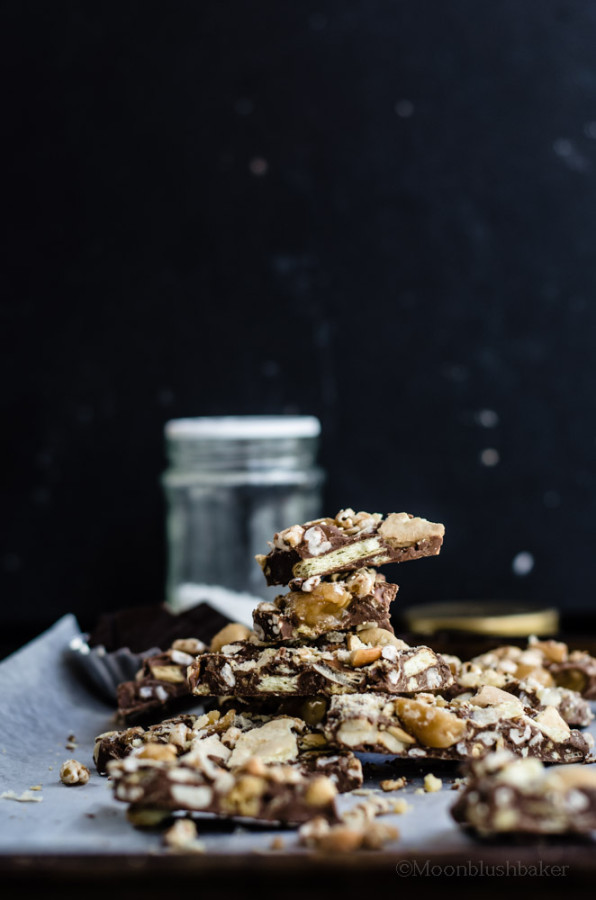
Any recipe featuring chocolate instantly becomes a household favorite here. Recently, I wanted to explore chocolate making and shaping more deeply after successfully creating my first chocolate presentation box filled with delicate petit fours. Combine this with the current trend of handcrafting confections like marshmallows, and you have the recipes I'm currently "exploring" to perfect. Those of you in the northern hemisphere are fortunate to have such diverse inspiration lining candy shop shelves. We don't have access to specialty items like sourdough-infused salted chocolate here. I'm eager to recreate something similar at home, but meanwhile, I've made this chocolate bark twice before sharing this post because I couldn't stop enjoying it.
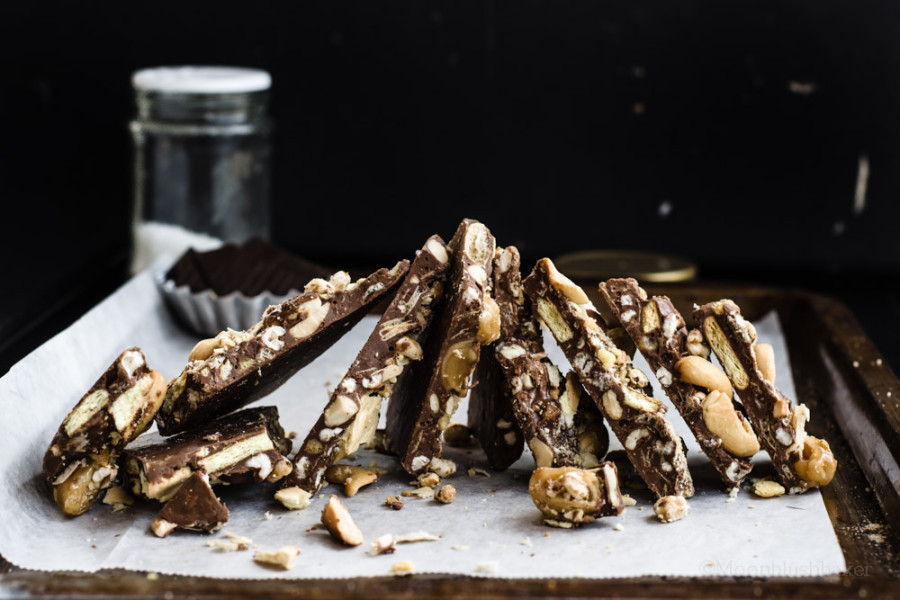
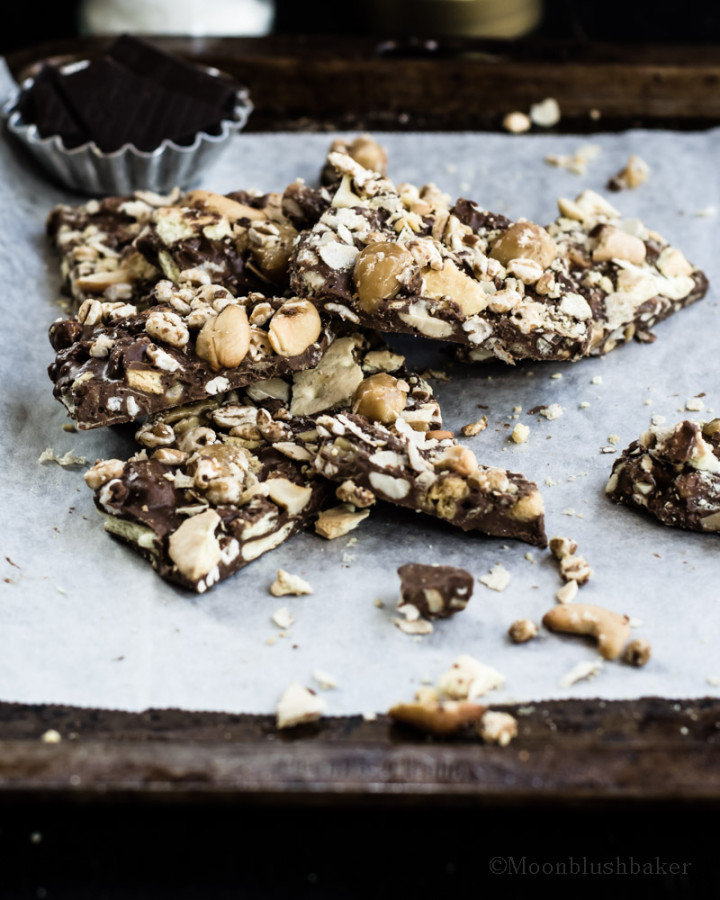
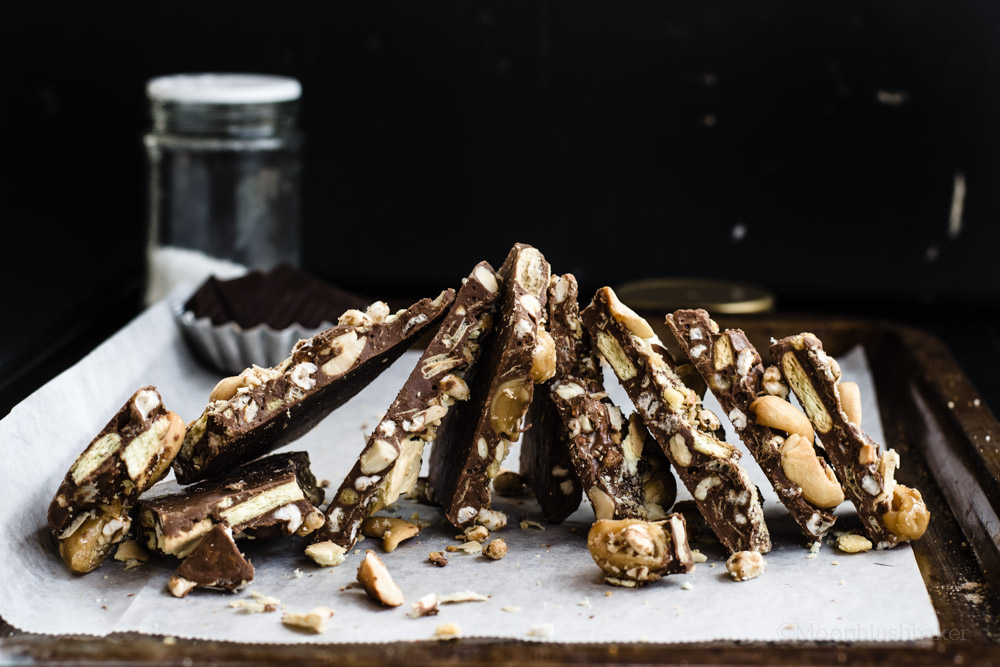
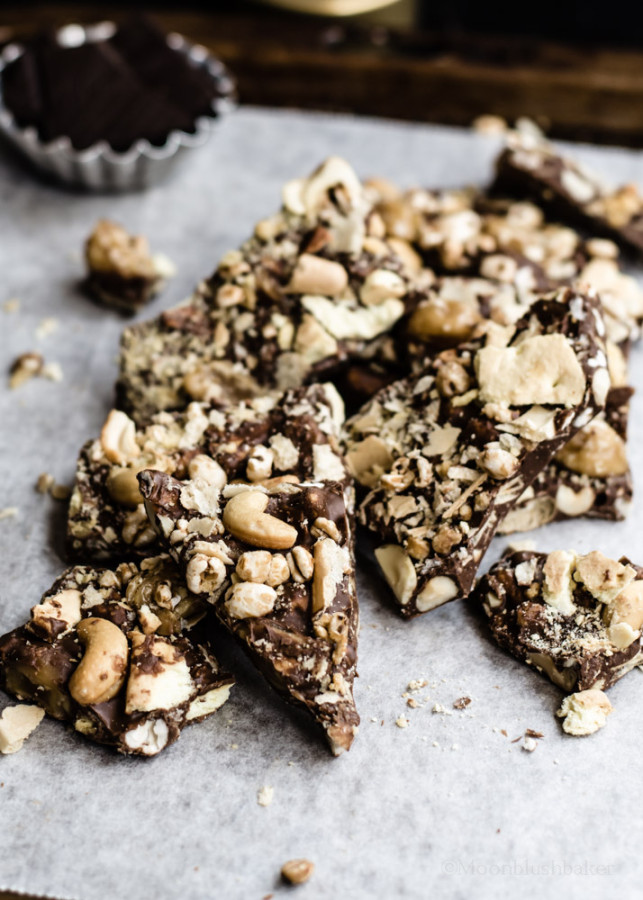
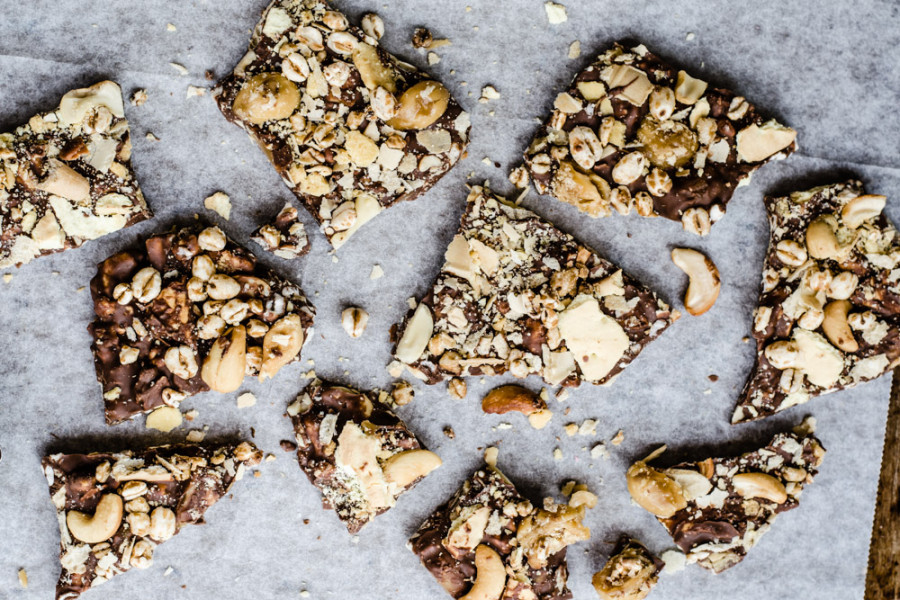
This is an elevated version of traditional untempered chocolate bark, completely loaded with delicious ingredients. I'm calling this "party of five" Chocolate bark because all the components have simple substitutions, but you need to understand the category each ingredient belongs to.
First is chocolate: Dark, bittersweet, milk, or white. You just need to know the proper tempering temperatures for each chocolate type, as white and dark varieties differ dramatically due to their cocoa-to-fat ratios. I've listed several helpful resources below.
Tempering Resources:
- TheKitchn's guide to thermometer-free chocolate tempering
- Food 52's guide to thermometer-based chocolate tempering
- Top with Cinnamon's food processor tempering method
- The Essential Ingredient's guide with Celsius measurements
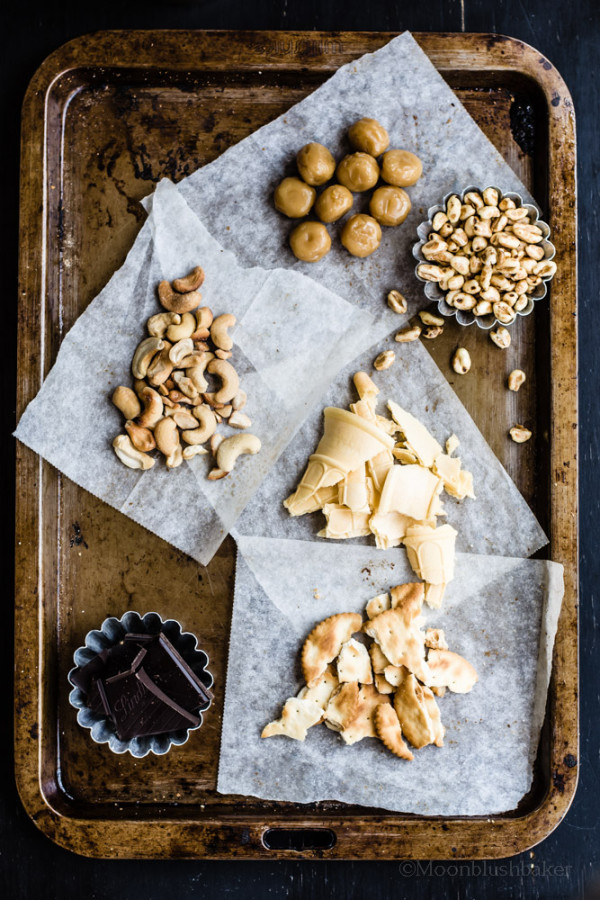
After chocolate, all the mix-ins start with "C": Cereal, Crackers, Cones, Cashews, and Caramels.
For the cereal, I selected wheat puffs; crackers are standard cheese crackers; cones are those faux waffle cones (often served to children or with soft-serve); caramels are the soft-centered variety; and cashews are salted roasted. I realize the final ingredient is technically a nut, but work with me here!
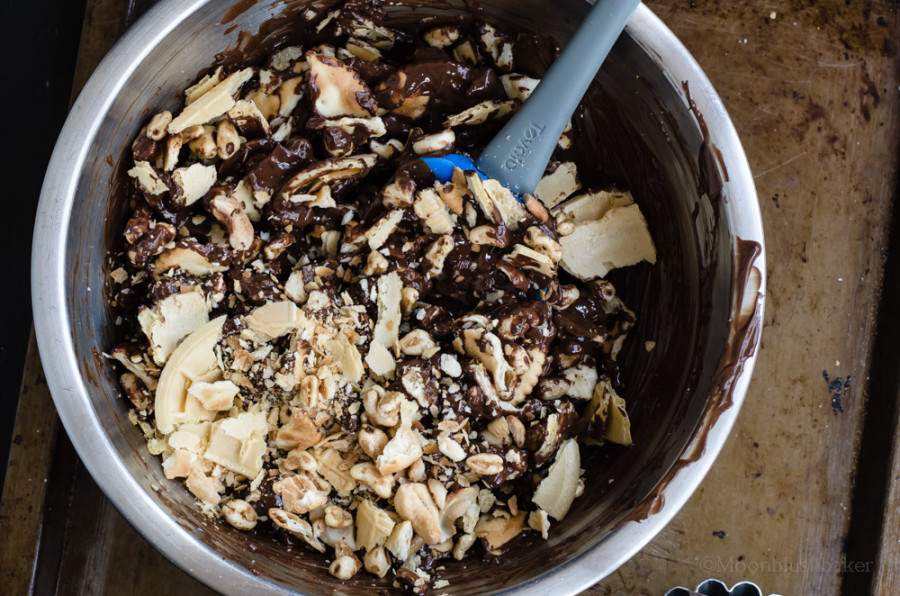
I'm confident you can substitute the ingredients with anything you prefer. One variation could feature dark chocolate with puffed rice, Ritz crackers, chocolate wafer cones, crushed hard caramel, and roasted peanuts. For a more sophisticated palate, consider combining caramelized panko, waffle cone pieces, puffed quinoa, and a blend of toasted black and white sesame seeds with very dark chocolate.
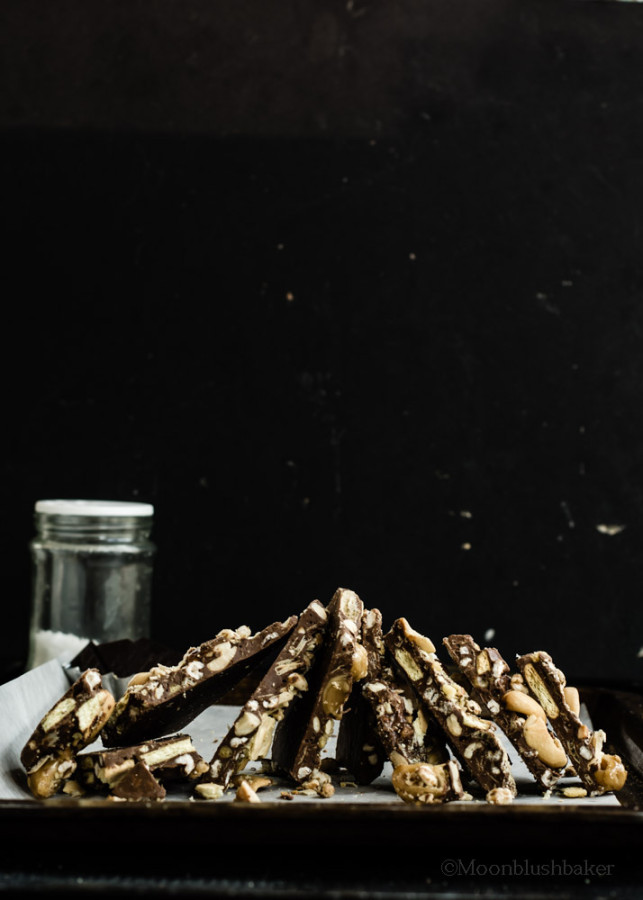
Whatever you decide to create, this is the simplest recipe you'll discover here for an instant party centerpiece and thoughtful hostess gift. I'd be delighted to hear what you incorporate into your bark—I'm constantly seeking new recipe inspirations to explore.
Note: As mentioned, customize this to your preferences, but I'm listing what I used here as this was the batch photographed. All you need is chocolate, cereal, crackers, caramels, ice cream cones, and a nut or seed (preferably roasted).
Five-Ingredient Chocolate Crackle Bark
Makes one 30cm x 27cm tray
Ingredients:
- 700g milk chocolate (see tempering notes above)
- 100g savory cheese crackers, crushed
- 5 faux waffle cones, crushed
- 40-60g puffed wheat
- 100g salted roasted cashews
- 10 soft-centered caramels, crushed
Instructions:
- Line a tray with baking parchment.
- Temper chocolate according to guides above. For milk chocolate: heat to 45°C, cool to 27°C, then reheat to 30-31°C. I used the seeding technique, but any method listed above works beautifully (I've tested them all).
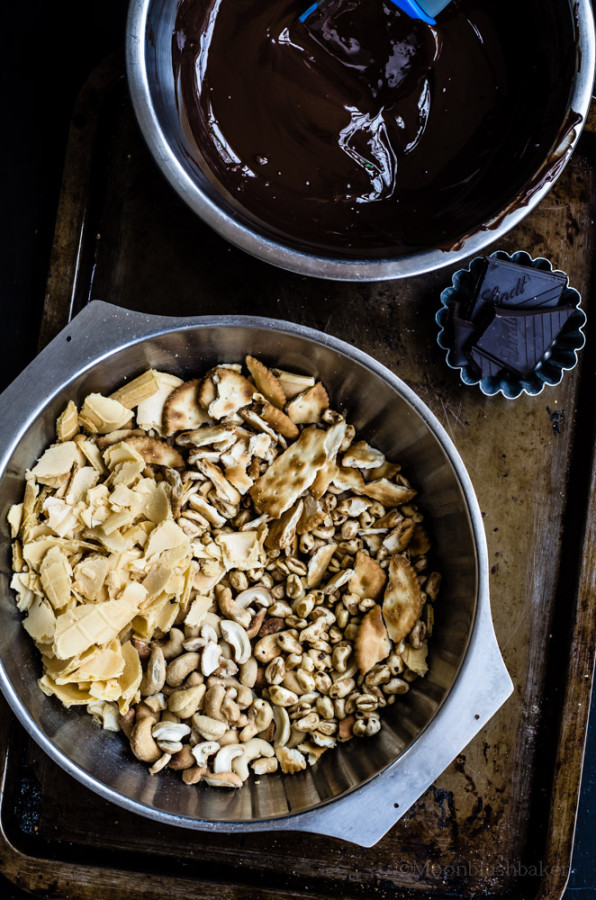
- In a separate large bowl, combine all your mix-ins and toss well.
- Once chocolate is properly tempered, add all ingredients to coat them thoroughly in chocolate. Transfer your chocolate mixture to the prepared tray. Using a spatula, spread evenly and allow to cool until completely hardened.
- Using a knife or your hands, break the bark into pieces of your preferred size.